Do You Need a USMLE Mentor? What Great Mentorship Actually Looks Like

Academic Director & USMLE Educator, Dermatology Resident

“Do I need a mentor?” is really two questions in disguise: can you self-study your way through USMLE prep (yes, plenty of people do), and would structured guidance meaningfully improve your odds and your timeline (also yes, for most people, just not for the reasons the sales pages usually claim).
This guide is deliberately honest about what mentorship actually does well, what it does not, and how to evaluate a program, including some real warning signs worth knowing about in a space where paid mentorship has attracted its share of bad actors.
- Mentorship’s real value is accountability, pacing, and blind-spot detection, not secret information.
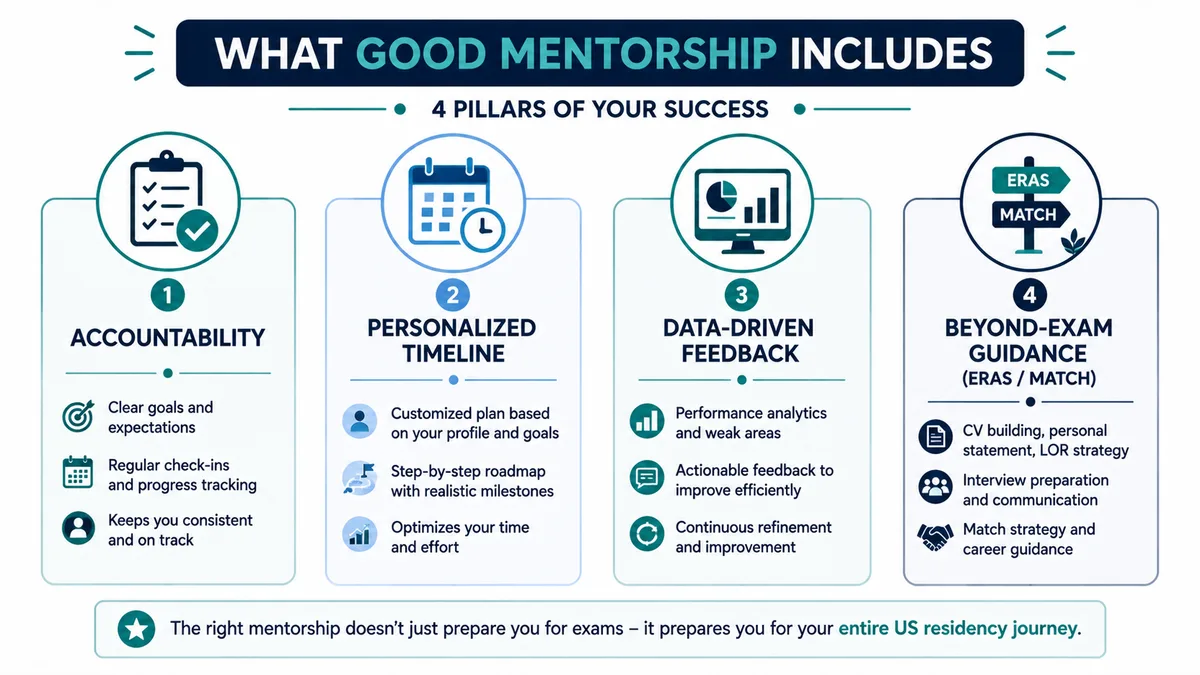
- Good mentorship includes structured check-ins, a personalized (not templated) timeline, and honest data-driven feedback.
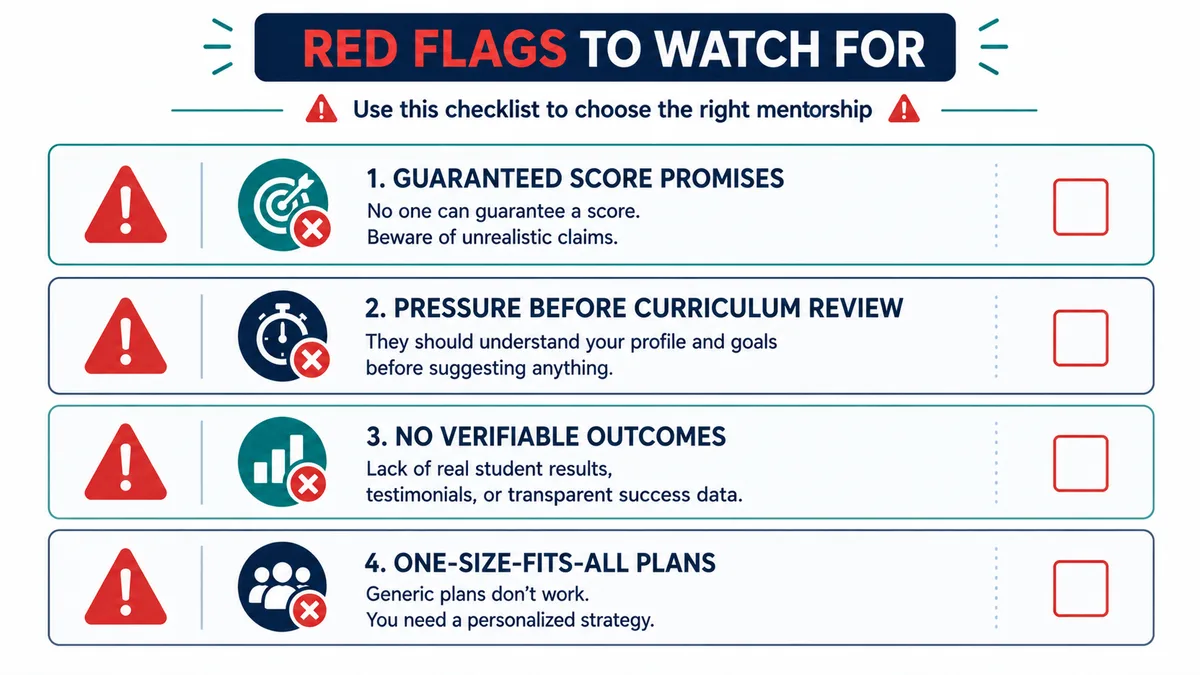
- Watch for red flags: guaranteed-score promises, pressure before you’ve seen a real curriculum, and no verifiable past outcomes.
- Peer mentorship helps with day-to-day questions; formal mentorship tends to help more with timeline and application strategy.
What Mentorship Actually Does Well
- Accountability: a scheduled check-in changes behavior in a way a self-made study plan often does not.
- Pattern recognition: a mentor who has seen many students’ practice-test data can spot a pacing or content blind spot faster than you can on your own.
- Timeline design: sequencing Step 1, Step 2 CK, Step 3, and application deadlines correctly is easy to get subtly wrong when you are doing it for the first time.
- Beyond-the-exam guidance: ERAS strategy, interview prep, and Match logistics are a different skill set from studying itself.
What Good Mentorship Looks Like in Practice
| Element | What to look for |
|---|---|
| Check-in cadence | Regular, scheduled, not ad hoc |
| Study plan | Personalized to your timeline and weak areas, not a generic template |
| Feedback | Specific and data-driven (practice-test trends), not just encouragement |
| Scope | Covers exam prep and application/Match strategy |
- Guaranteed score promises: no legitimate program can guarantee your exam outcome.
- Heavy pressure to commit and pay before you’ve reviewed an actual curriculum or spoken with a real mentor.
- No verifiable past-student outcomes or testimonials you can actually check.
- One-size-fits-all study plans handed out without any assessment of your specific starting point.
Formal Mentorship vs. Peer Mentorship
A senior student or resident can be genuinely helpful for day-to-day study questions and moral support. What formal, structured mentorship tends to add on top is visibility across many students’ timelines and outcomes, the kind of pattern-recognition that catches a pacing problem or an application-strategy mistake before it costs you months.
How to Tell If It's Actually Working
Track it like data, not vibes: are your Qbank and self-assessment scores trending in the direction your plan predicted? Are you actually following the plan more consistently than you would alone? Is the feedback you are getting specific enough to act on immediately?
Frequently Asked Questions
Do I actually need a mentor to pass the USMLE?
No, plenty of students succeed with self-directed prep. A mentor helps most with accountability, pacing, and catching blind spots you can’t see in your own study patterns, not with providing information you couldn’t otherwise find.
What should good USMLE mentorship actually include?
Regular structured check-ins, a personalized study timeline (not a generic template), honest feedback on your practice-test data, and guidance on the parts of the process beyond studying: ERAS, interviews, and the Match itself.
What are red flags in a mentorship program?
Vague promises of guaranteed scores, pressure to commit before you’ve seen a real curriculum or talked to a real mentor, and a total absence of verifiable past-student outcomes are all worth treating with skepticism.
Is peer mentorship (a senior student) enough, or do I need a formal program?
Peer mentorship can genuinely help with day-to-day study questions, but formal, structured mentorship tends to add more value on timeline planning and application strategy, pattern-recognition across many students’ prep that a single peer mentor rarely has visibility into.
How do I know if a mentor is actually helping?
Track it concretely: are your self-assessment scores trending up on the timeline you agreed to, are you sticking to the plan more consistently than you would alone, and are you getting specific, actionable feedback rather than generic encouragement?
Conclusion
If you are evaluating mentorship options, we would rather you make an informed choice than a rushed one. See real outcomes from our mentees or explore what our 1:1 mentorship program actually includes before deciding.
Next step
Step 1 & Step 2 CK Prep
Structured modules, 1-on-1 mentorship, and a 100-day plan to clear the boards.