USMLE Step 3 Study Plan 2026: Week-by-Week Guide, Best Resources & CCS Strategy

Academic Director & USMLE Educator, Dermatology Resident

Step 3 often gets under-prepared for the simple reason that it arrives after years of Step 1 and Step 2 grinding, frequently while you are already working clinical hours as a resident. This guide gives you the confirmed current exam format, real named resources for the CCS component, and an actual week-by-week structure built around residency schedules.
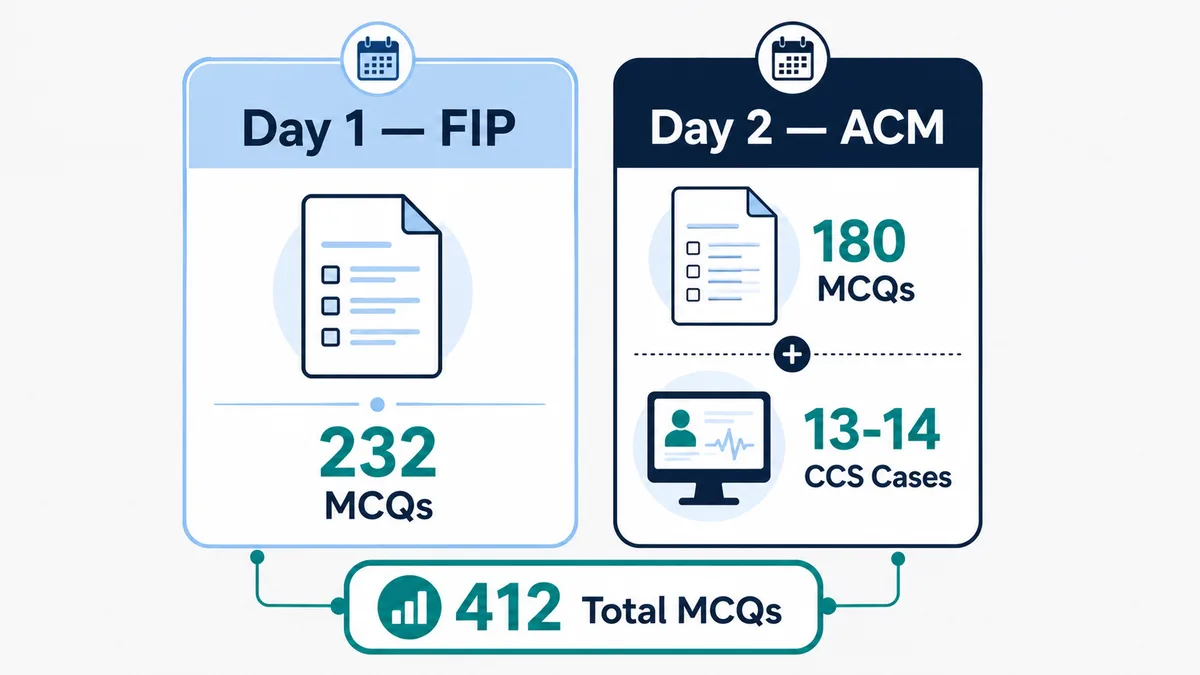
- 412 total MCQs across two days, plus 13–14 CCS cases on Day 2.
- Passing score: 200 (raised from 198 in Jan 2024, still current); 2025 mean was 227.
- Prep window: 2–3 weeks intensive or 4–6 weeks part-time, not a single blended range.
- CCS cases are a distinct skill and need their own named resource, not a vague case bank.
- The March 2026 software update changed the interface only, not the content or scoring.
The Confirmed Current Step 3 Format
Two days, unchanged in total content since the March 2026 interface update:
| Day | Content | Structure |
|---|---|---|
| Day 1: Foundations of Independent Practice (FIP) | 232 MCQs, no CCS | 12 blocks of 18–20 questions, 30 min/block, ~7 hrs total |
| Day 2: Advanced Clinical Medicine (ACM) | 180 MCQs + 13–14 CCS cases | 9 MCQ blocks (30 min each) + CCS, each case capped at 10 or 20 min, ~9 hrs total |
Total: 412 MCQs. Passing score is 200; the 2025 mean for first-time LCME graduates was 227 (SD 15). First-attempt pass rates run roughly 96% for US MD, 89% for US DO, and 75–85% for IMGs.
NBME moved all Step 3 exams to new test-delivery software on March 10, 2026: updated interface, contrast controls, and faster navigation between items and cases. This is a software change only. Some lower-quality blogs have claimed the block structure itself changed; the official USMLE format page confirms it has not.
A Sample Week-by-Week Structure
| Weeks | Focus |
|---|---|
| 1–2 | MCQ Qbank review by system, official free tutorial for CCS interface familiarity |
| 3–4 | Continue MCQ review, begin dedicated CCS case practice (order sequencing, time management) |
| 5–6 | Timed mixed blocks, deepen CCS case volume, review every miss the right way |
| 7 | First full NBME self-assessment under real timing conditions |
| 8 | Targeted review of weak areas from the self-assessment, light review only in the final days |
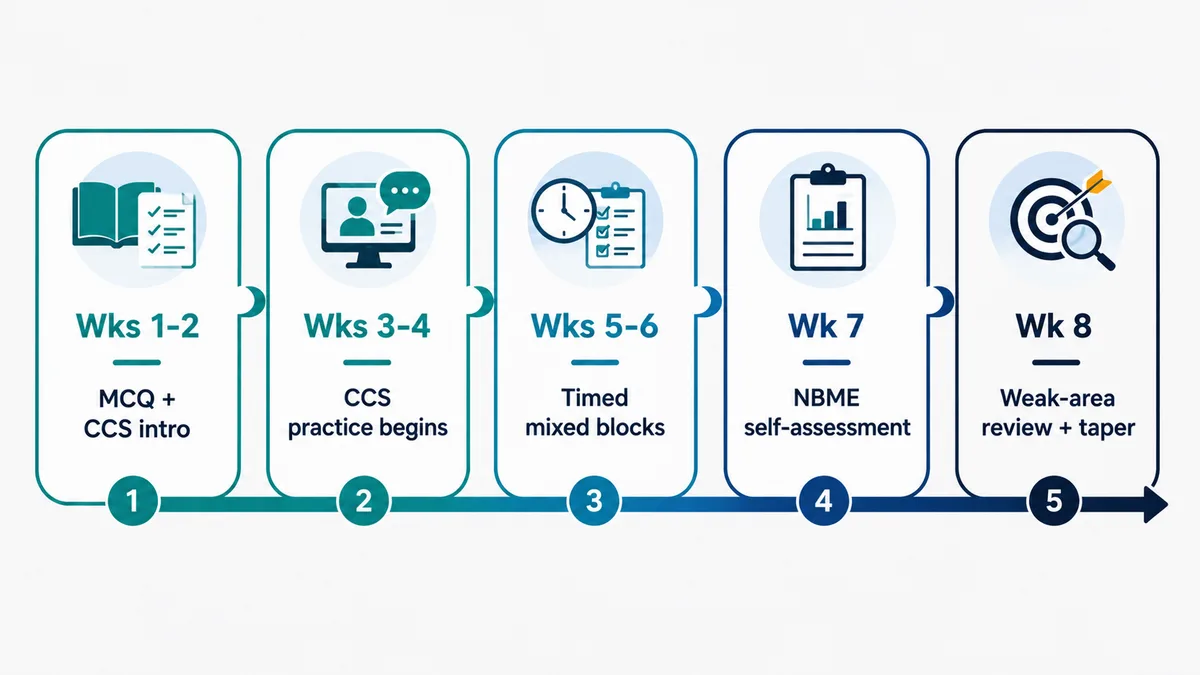
Compress weeks 1–4 into a tighter 2–3 week block if you are studying full-time with a strong, recent Step 2 CK score; stretch the whole plan across 4–6 weeks part-time if you are balancing a normal clinical schedule.
Why CCS Needs Its Own Named Resource
CCS cases unfold over simulated time: you order tests and treatments and monitor a patient’s course through a menu-driven interface with no multiple-choice safety net. Examinees who only drill MCQs frequently lose their first case or two simply learning the interface and pacing under real exam conditions.
- UWorld’s own Step 3 CCS cases, bundled into its Step 3 Qbank subscription, widely used and closely mimics the real interface.
- StudyCCS.com, an independent CCS-specific practice platform with free order-set guides.
- The free official NBME CCS practice software, which every examinee should try before any paid resource, well ahead of test day.
Learn the interface fast, 10–20 practice cases is usually enough to get comfortable, then prioritize drilling order sets across many different presentations rather than repeating full 25-minute cases end to end. On Day 1, biostatistics, medical ethics, and pharma-style questions are disproportionately tested and often underweighted in general Step 2 CK-style review.
Best Resources by Purpose
- MCQ Qbank (e.g. UWorld Step 3): core content review and explanation depth.
- Named CCS resource (UWorld CCS cases, StudyCCS, or the free NBME software): case sequencing, order-writing, time management.
- NBME self-assessment: the single most reliable predictor of your scaled score, since NBME writes both the assessment and the real exam.
- NBME Free 137: the free official practice set, the closest no-cost approximation of the real exam.
- Treating Step 3 prep identically to Step 1/2 CK prep, ignoring CCS entirely.
- First encountering the CCS interface during a timed practice test instead of the free tutorial.
- Skipping a paid NBME self-assessment and relying only on Qbank percentages to judge readiness.
- Underestimating how residency clinical hours will compress your available study time; plan realistically, not aspirationally.
- Waiting too long after Step 2 CK, letting more than 18 months pass before sitting Step 3.
Frequently Asked Questions
How long should I study for Step 3?
It splits into two common approaches: 2–3 weeks of intensive full-time study for residents with a strong, recent Step 2 CK score, or 4–6 weeks part-time (1–2 hours a day) for a typical PGY-1 or PGY-2 balancing clinical duties. Both are more accurate than a single blended “4–8 weeks” range.
What's the biggest difference between Step 3 prep and Step 1/2 prep?
The CCS (Computer-based Case Simulation) component on Day 2: 13–14 cases, each capped at 10 or 20 minutes of real time. It tests managing a simulated patient over time, a skill MCQ-only study does not prepare you for at all.
Do I need a separate CCS-specific resource?
Yes, and it should be a named one, not a vague “case bank.” UWorld’s own Step 3 CCS cases (bundled into its Step 3 subscription) and independent platforms like StudyCCS.com are the resources people actually use, alongside the free official NBME CCS practice software.
Should I take Step 3 before or during residency?
Most examinees take it during PGY-1 or early PGY-2, ideally paired with a lighter elective or outpatient rotation and while Step 2 CK knowledge is still fresh, within about 6–18 months. Confirm your program’s expectations and any state licensing deadlines that apply to you.
Did the March 2026 Step 3 software update change the exam format?
No. NBME moved all Step 3 exams to new test-delivery software on March 10, 2026, an interface and navigation update only. The total content, 412 MCQs across two days plus 13–14 CCS cases, and the passing score of 200, are unchanged.
Conclusion
Step 3 is the final hurdle before full licensure, worth getting a structured plan and a real CCS resource around, especially while juggling residency. Explore our mentorship program or read how past residents balanced Step 3 with clinical duties.
Next step
Step 1 & Step 2 CK Prep
Structured modules, 1-on-1 mentorship, and a 100-day plan to clear the boards.