How to Review a UWorld Qbank Block: The Right Way (2026)
Academic Director & USMLE Educator, Dermatology Resident
Here is the uncomfortable truth about question banks: your score does not come from doing questions — it comes from how you review them. Two students can finish the same 2,000 UWorld questions and walk into the exam with a 30-point gap, purely because one reviewed every block deliberately and the other clicked “next” the moment they saw the answer.
Most students treat the Qbank as a scoreboard — chasing a percentage instead of mining each block for everything it can teach. This guide breaks down the right way to review a Qbank block: a repeatable, six-part system that turns every block (UWorld, the USMLEed Qbank, AMBOSS, or NBME forms) into real, durable learning. Treat it as a core part of your wider USMLE preparation, not an afterthought.
The right way to review a Qbank block, in six moves:
- Read every explanation — right answers included.
- Learn from the distractors — know why each wrong choice is wrong.
- Audit your lucky guesses — a guess is a miss.
- One sentence per miss — a single takeaway becomes your recall tool.
- Space your review — revisit flagged questions 48–72 hours later.
- The 20-minute rule — skim First Aid for the same topics after every block.
Why Review Matters More Than Your Question Count
Doing questions tells you what you don’t know. Reviewing questions is where you actually learn it. The block itself is just a diagnostic; the review is the treatment. Students who race to finish UWorld twice but review shallowly tend to plateau, while students who do it once with deep review keep climbing. If you are mapping out your timeline, our 12-week Step 2 CK study plan and 6-month Step 1 blueprint both build this review habit into the daily schedule.
1. Read Every Explanation — Even the Ones You Got Right
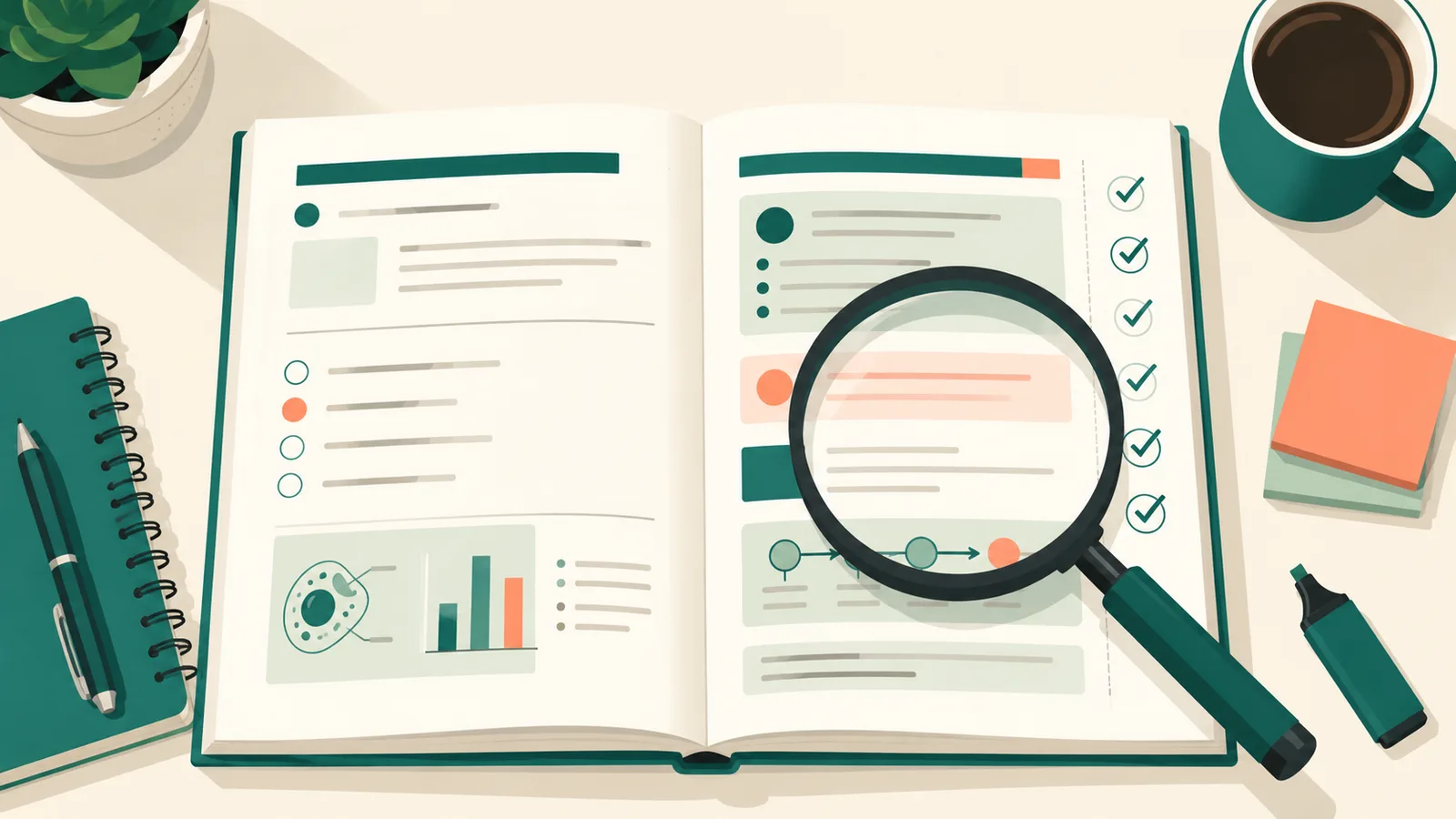
Don’t just review what you got wrong. You get questions right for the wrong reason far more often than you think — a half-remembered buzzword, a lucky pattern-match, an educated stab. Reading every explanation, every time, catches those hidden gaps before the exam does. Read the full teaching point, not just the bolded conclusion. And as you go, restate each question as a stand-alone — strip away the vignette and say plainly what was actually being tested. If you can’t, the gap is in reading the question, not in the content.
2. Learn From the Distractors
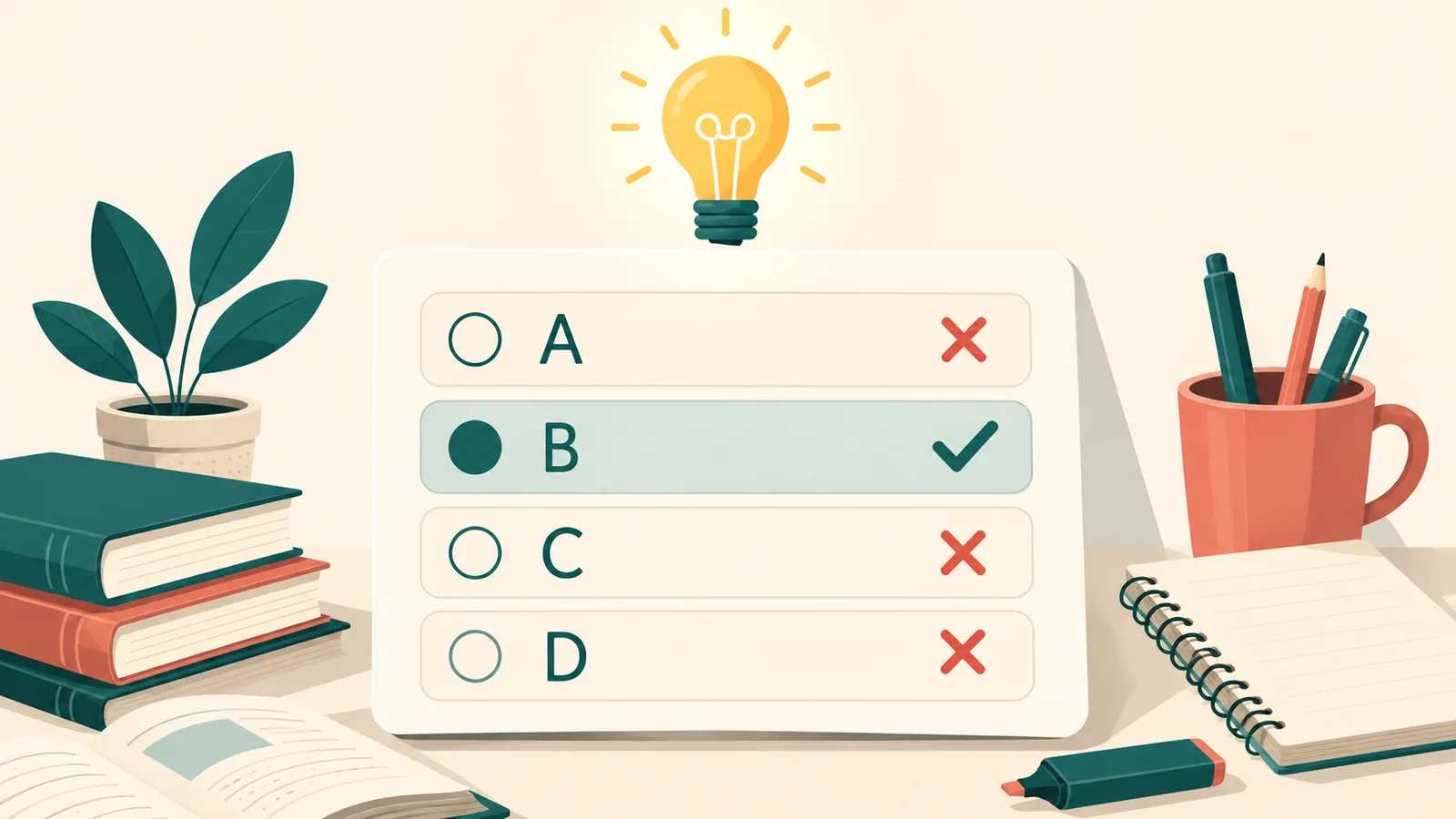
Start with your wrong answers. First, master the concept the question is testing — then go choice by choice and ask why each distractor was wrong. Pin down the hinge point — the single detail in the vignette that makes the right answer more correct than the next-best option. If you can name it, you understood the question; if you can’t, you guessed. On the real exam, those distractors reappear as the correct answer to a different question. A single well-written UWorld question can quietly teach you four or five conditions if you let the wrong options do their job.
For every missed question, finish the explanation by completing this line out loud: “I picked B, but the answer is D because…” — then add, “…and B would have been right if the question had said…”. That second half is where the deep learning hides.
3. Audit Your Lucky Guesses
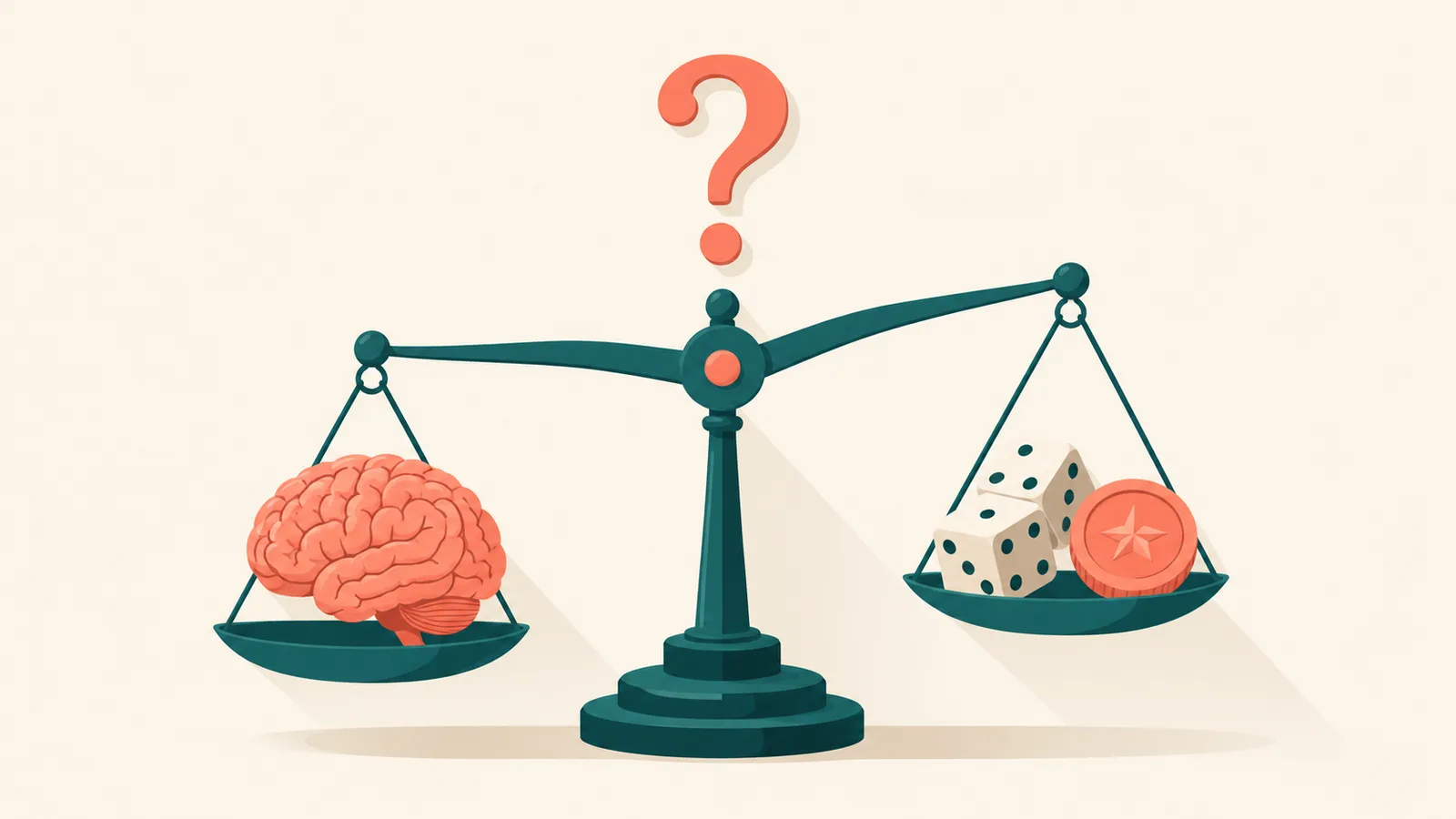
This is the step almost everyone skips. Review your correct answers and ask honestly: did I truly know this, or did I eliminate my way to it and get lucky? If you guessed, treat it as a miss and study the concept as if you got it wrong. The exam will not reward the same lucky elimination twice. A simple habit helps: while you take the block, flag any question you are not 100% sure of, even when you end up right.
4. One Sentence Per Miss

For every question you missed, write a single takeaway sentence — not a paragraph, not a re-copied explanation. One crisp line that captures the testable point:
Renal artery stenosis: high renin, high aldosterone, low sodium delivery to the macula densa.
These one-liners become your personal rapid-recall sheet for the final weeks — a high-yield document built entirely from your own weak spots. Paragraphs you will never re-read; single sentences you will.
5. Space Your Review
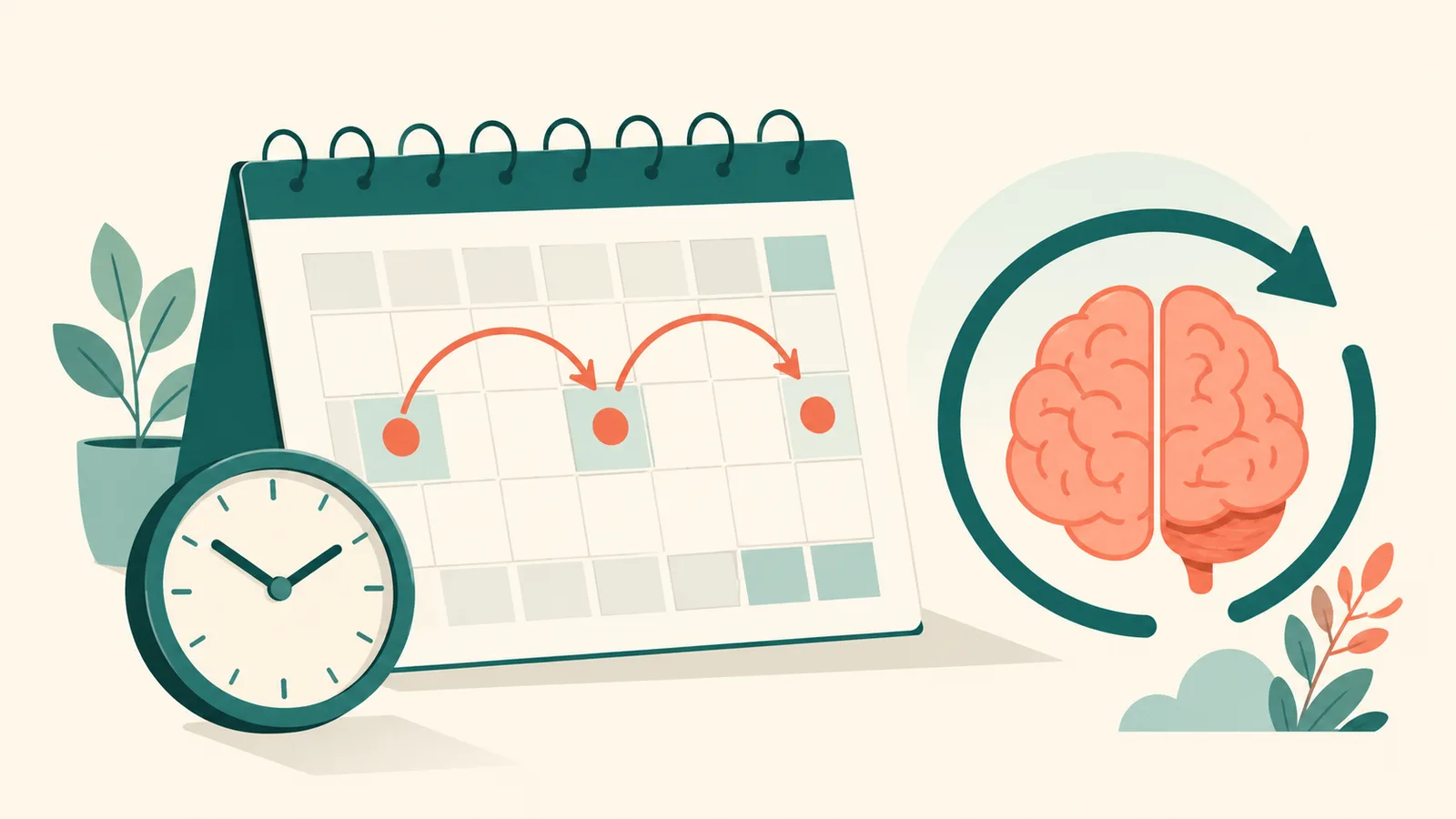
Never re-read your notes the same day — same-day review feels productive but mostly rehearses short-term memory. Instead, revisit your flagged questions and takeaway sentences 48–72 hours later, with the answer hidden. Can you reproduce the reasoning from scratch? If yes, it has moved toward long-term memory. If you can’t recall it, that is your signal to re-study the concept now, not in the last week. This is spaced retrieval — the same engine behind testing-effect research — and it is the highest-yield study technique you are probably underusing.
6. The 20-Minute Rule
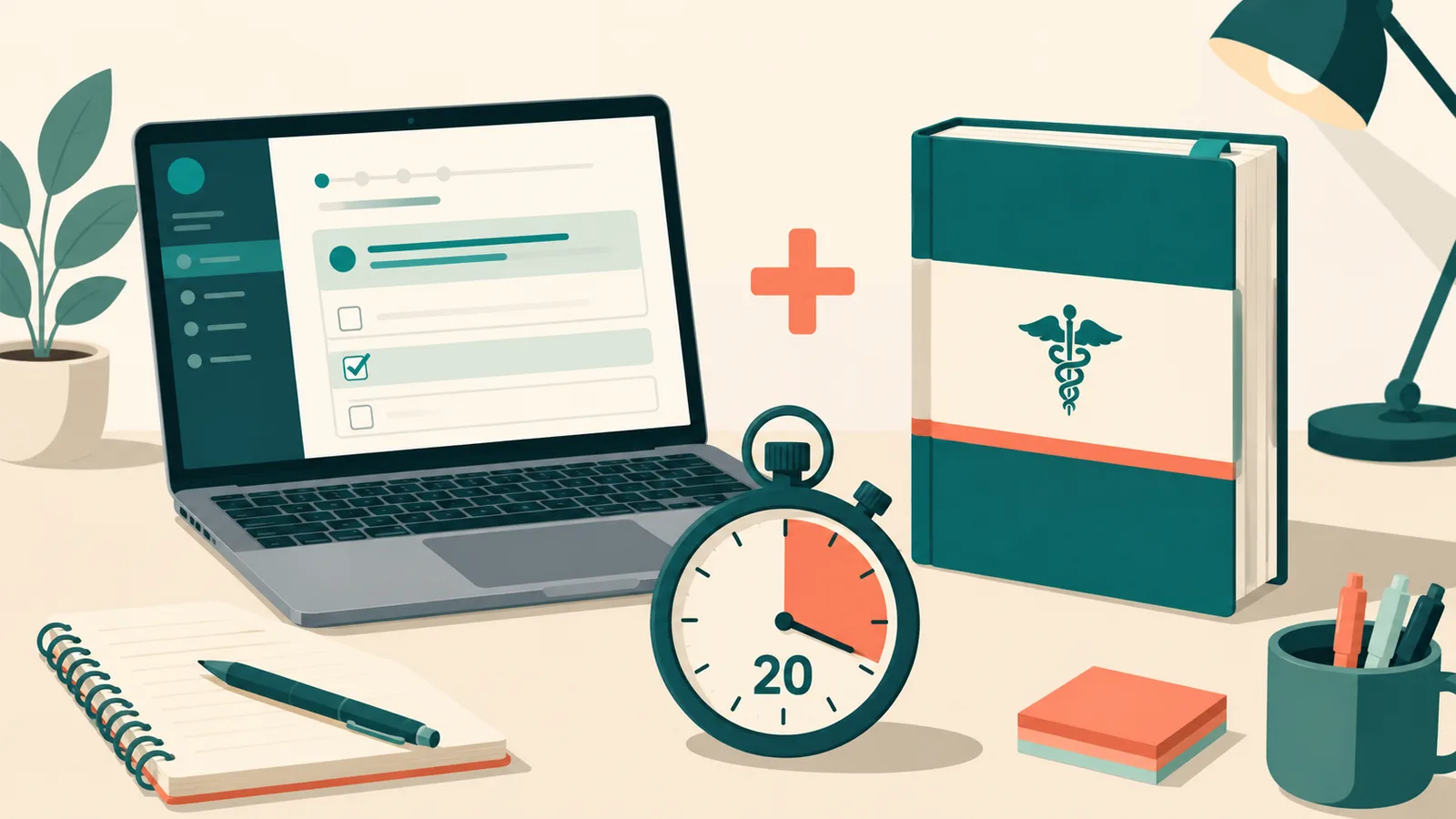
After every block, spend 20 minutes skimming First Aid (or your primary review resource) for the same topics the block tested. This stitches the isolated question into the bigger picture — you see the one fact you missed sitting next to the ten facts around it. Qbank plus lecture notes is how high-yield learning compounds over a dedicated period: questions expose the gap, the resource fills the context, and the takeaway sentence locks it in. Better still, annotate the takeaway straight into that one resource — jot the missed fact in the margin of First Aid so it becomes your single source of truth. Notes scattered across five apps never get reviewed; one annotated book does.
Diagnose Every Miss: Knowledge, Reasoning, or Careless?
Before you move on from a question, label why you missed it — each cause needs a different fix, and lumping them together is exactly why students keep repeating the same errors:
| Type of miss | What happened | The fix |
|---|---|---|
| Knowledge gap | You didn’t know the fact or concept | Study it; write a one-sentence takeaway |
| Reasoning / application | You knew the fact but applied it wrong | Do more questions on that concept |
| Misread the question | Missed a keyword (“most likely,” “next best step,” a negative) | Slow down your first read |
| Careless slip | You knew it but clicked too fast | Track them — a pile of these is a pacing problem, not a knowledge one |
Putting It Together: A Realistic Block-Review Workflow
Doing questions takes an hour; reviewing them well usually takes longer than the block itself early on — and that is exactly right. Here is a sustainable rhythm for a single 40-question block:
| Step | What you do | Rough time |
|---|---|---|
| 1. Do the block | Timed, random, flag anything uncertain | ~60 min |
| 2. Deep review | Every explanation; distractors; audit guesses | 60–90 min |
| 3. One-liners | One takeaway sentence per miss + lucky guess | 10–15 min |
| 4. 20-minute rule | Skim First Aid for the same topics | 20 min |
| 5. Spaced revisit | Re-test flagged questions, answer hidden | 48–72 h later |
Early on, lean toward tutor mode to absorb the reasoning; as the exam nears, switch to timed and random so your review reflects real test conditions. Let the data steer you, too: your Qbank’s performance reports flag which systems and disciplines lag, so you can target weak areas instead of reviewing at random — and the search function pulls every question on one topic so you can see how the exam tests it from different angles. For how that fits a full timeline, see our 12-week Step 2 CK plan.
Common Qbank Review Mistakes to Avoid
- Reviewing only your wrong answers — your lucky guesses are silent weak spots.
- Re-reading explanations passively — recognition is not recall.
- Copying whole explanations into notes — you will never re-read them; write one sentence instead.
- Chasing your percentage — a higher score from shallow review is a vanity metric.
- Reviewing the same day and never again — without spacing, it fades before test day.
These quiet habits are exactly the kind of silent USMLE killers that cost strong students real points.
Frequently Asked Questions
How long should it take to review a Qbank block?
Early in your prep, expect review to take longer than the block itself — often 60–90 minutes for a 40-question block. That is normal and a sign you are reviewing deeply. It speeds up as your foundation strengthens.
Should I review questions I got right?
Yes — at least the ones you were unsure about. If you reached the right answer by guessing or eliminating, treat it as a miss and study the concept. Lucky guesses are silent weak spots the exam will expose.
Is tutor mode or timed mode better for review?
Use tutor mode early to learn the reasoning behind each question, then shift to timed and random mode as the exam nears so your practice and review mirror real test conditions and pacing.
How do I review UWorld without just memorizing answers?
Focus on the concept and the distractors, not the specific vignette. Write a one-sentence takeaway in your own words and re-test the flagged question 48–72 hours later with the answer hidden — if you can reproduce the reasoning, you learned the concept, not the answer key.
Should I make Anki cards from every question?
Not every question — that path leads to card overload. Make a card (or a one-sentence takeaway) only for genuine knowledge gaps: concepts you missed or guessed. Quality and spaced repetition beat raw card volume.
Conclusion
A Qbank is only as powerful as your review process. Read every explanation, mine the distractors, audit your guesses, distill each miss into one sentence, space your revisits, and anchor it all with the 20-minute rule. Do this consistently and your percentage takes care of itself — because you are finally learning the questions instead of just answering them.
Want expert guidance turning Qbank work into a real score? Explore our USMLE Step 1 & Step 2 CK preparation program and see how our students have matched into U.S. residency.
Next step
Step 1 & Step 2 CK Prep
Structured modules, 1-on-1 mentorship, and a 100-day plan to clear the boards.