Why USMLE CV Can Be Rejected?

Academic Director & USMLE Educator, Dermatology Resident
This is the companion to our guide on how to build a strong USMLE CV, but it answers a different question: not how to build a good CV, but why an application gets screened out before anyone reads it closely. Most of that filtering has nothing to do with formatting.
This guide covers the two-stage screening process programs actually use, the numeric and categorical filters some set before a human ever opens your file, the visa and graduation-year cutoffs that quietly reject strong applicants, and the CV-level triggers that undercut candidates who clear the objective filters.
- ERAS is not an ATS, it is a structured form; the real filtering happens via program-set cutoffs.
- Roughly 35.5% of applications are rejected at the objective-filter stage before holistic review.
- Programs commonly filter on Step 2 CK score, visa status, and years since graduation.
- Visa-sponsorship filtering is tightening, even as IMG applicant volume rises.
- Sloppy visa or USCE answers get otherwise-strong CVs screened out independent of scores.
ERAS Isn’t an ATS: It’s Program-Set Filters
A lot of advice online talks about “beating the ATS” the way you would for a corporate job board. ERAS does not run a keyword-parsing scanner. MyERAS is a structured-field application; programs view a standardized PDF with fixed fields and character limits. The actual filtering happens through the Program Director’s Workstation (PDWS), where programs set their own rule-based cutoffs (Step scores, visa status, graduation year, USCE requirements) before a human reads anything. Your CV is not being algorithmically parsed; the data points behind it are being filtered.
The Two-Stage Screen
Understanding these as two separate stages changes what you should actually worry about:
Roughly 35.5% of applications are rejected here, before any human reads them, using hard numeric or categorical cutoffs the program set in advance.
What survives Stage 1 gets read against NRMP’s own weighted factors: USMLE Step 1 pass status (90%), MSPE (85%), and specialty-specific letters of recommendation (84%). This is where your CV, personal statement, and letters actually get judged on quality.
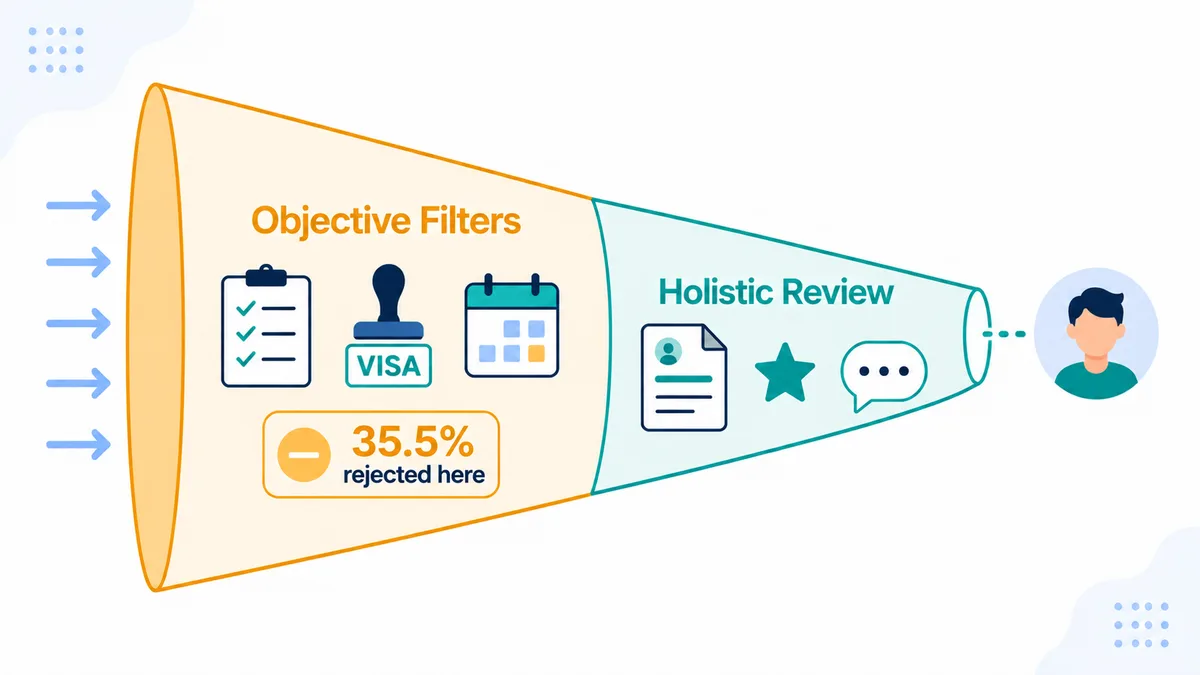
A polished CV only matters once you clear Stage 1. Spend real effort confirming your numbers fit a program’s stated criteria before polishing the document itself.
The Numbers Some Programs Filter On
No single national cutoff exists, and the ranges below are commonly reported by advisors, not officially published NRMP thresholds; treat them as directional.
| Filter | Commonly reported range |
|---|---|
| Step 2 CK, typical IM program | 245+ generally clears first-pass filters |
| Step 2 CK, some IMG-specific minimums | Up to 250 on first attempt cited at some programs |
| Step 2 CK, less competitive locations | Around 215–220 |
| Competitive specialties (Derm, Ortho) | Average scores near 257; many do not review below that range |
Preference signaling does not overcome a hard filter: 67% of PDs rate signaling as important, but signaling a program with a 260 cutoff at a 235 score is wasted effort. See how USMLE scoring works for the full picture of where these numbers come from.
Visa Sponsorship: A Silent Filter That’s Tightening
Many programs explicitly restrict applications to US citizens and permanent residents only, before scores are even reviewed. H-1B sponsorship has been gradually declining industry-wide, citing cost and administrative complexity, leaving J-1 (ECFMG-sponsored) as the default IMG pathway. 2025 saw a documented disruption to J-1 visa interview scheduling that tightened the pipeline further, even as non-US IMG applicant volume rose roughly 14.4% year over year. Confirm each program’s current visa policy before applying rather than assuming sponsorship availability.
Graduation-Year Cutoffs
Programs frequently set a years-since-graduation filter, commonly a window of 3–5 years, sometimes strictly enforced (3 years, 6 months does not qualify at a 3-year cutoff). This disproportionately affects older IMGs and is rarely discussed with any specificity elsewhere.
CV-Level Rejection Triggers
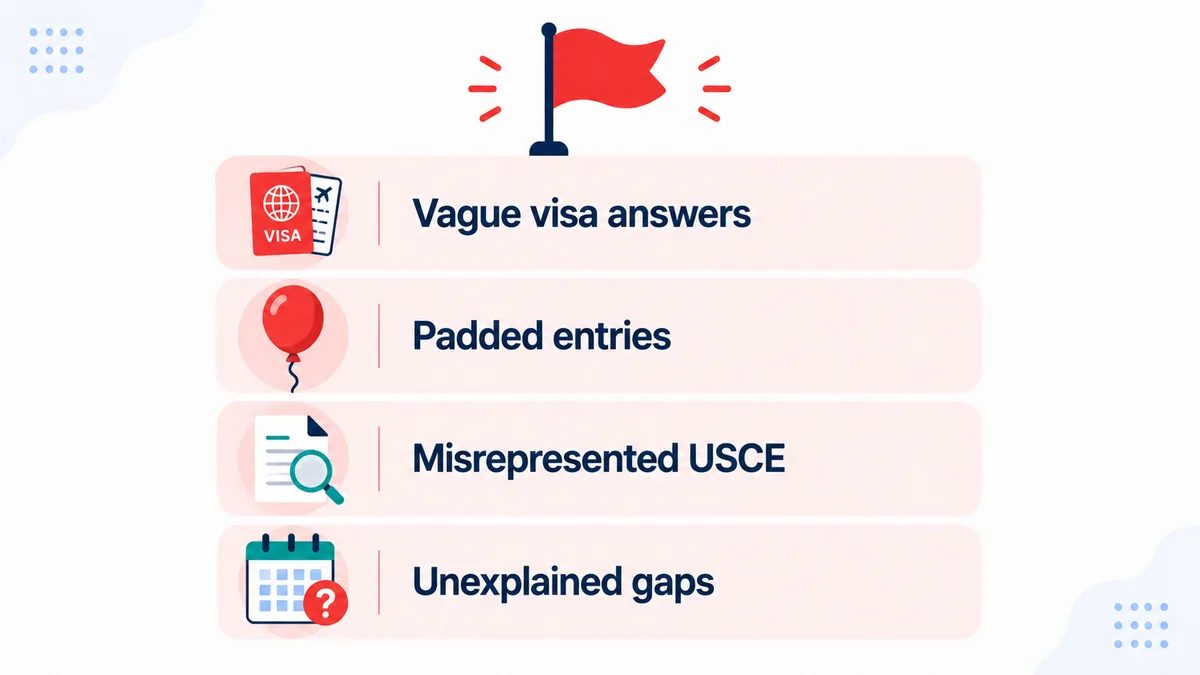
- Sloppy or vague visa-status answers: flagged as a top silent screen-out trigger, independent of scores.
- Padded or exaggerated entries: inflated titles, vague research claims. PDs pattern-match this quickly.
- Misrepresented USCE: calling shadowing “clinical experience” without distinguishing it from hands-on rotations.
- Unexplained gaps in your education or training timeline, with no brief note.
- Missing core data: incomplete USMLE scores, ECFMG status, or graduation date.
- Mismatched applications: applying to a program whose stated Step score, grad-year, or visa policy you do not meet, regardless of CV quality.
For the positive side of this (how to actually build the document once you clear these filters), see how to build a strong USMLE CV.
Frequently Asked Questions
Does ERAS use an ATS to automatically scan and reject CVs like corporate job applications?
No, ERAS is not a keyword-scanning ATS. It is a structured-field application that programs view as a standardized PDF. The real automated screening comes from program-set filters (Step 2 CK minimums, visa status, graduation-year windows, USCE requirements) applied through the program’s own workstation before a human ever opens your file.
What Step 2 CK score do I need to avoid being filtered out as an IMG?
There is no single universal number, but commonly reported ranges put 245+ as generally safe at most Internal Medicine programs, while some competitive programs set IMG-specific minimums as high as 250, and less competitive locations may filter around 215–220. Research each program’s stated minimums rather than assuming one national cutoff.
Do residency programs really filter out applicants who need visa sponsorship?
Yes. A meaningful share of programs explicitly restrict applications to US citizens and permanent residents, and H-1B sponsorship has been gradually declining industry-wide. J-1 remains the most common IMG pathway, but 2025 saw real disruptions to J-1 visa interview scheduling that tightened the pipeline further even as applicant numbers rose.
Can a strong CV overcome a low Step 2 CK score or an unfavorable graduation-year gap?
Not if the program uses that number as a hard, automated filter. Many programs will not route your application to human review at all if you fall outside their stated Step score or years-since-graduation window, regardless of CV quality.
What's the single most common CV-adjacent reason IMGs get silently screened out?
Sloppy or vague answers around visa status and USCE descriptions. These read as red flags independent of your scores, before a human reviewer even gets to your letters.
Conclusion
Most CV rejection advice focuses on formatting, but the real screen-outs happen earlier and more mechanically than that: a program-set cutoff you did not know existed, a visa answer that read as vague, or a graduation-year window you missed by months. Confirm you fit a program’s stated criteria before you apply, then let your CV do the rest of the work once you are actually being read.
Want expert eyes on your application? Explore our USMLE Step 1 & Step 2 CK preparation program and see how our students have matched into U.S. residency.
Next step
USMLE CV Building
Research, publications, and a match-ready CV tuned to your target specialty.