What Do Program Directors Seek from USCE?

Academic Director & USMLE Educator, Dermatology Resident
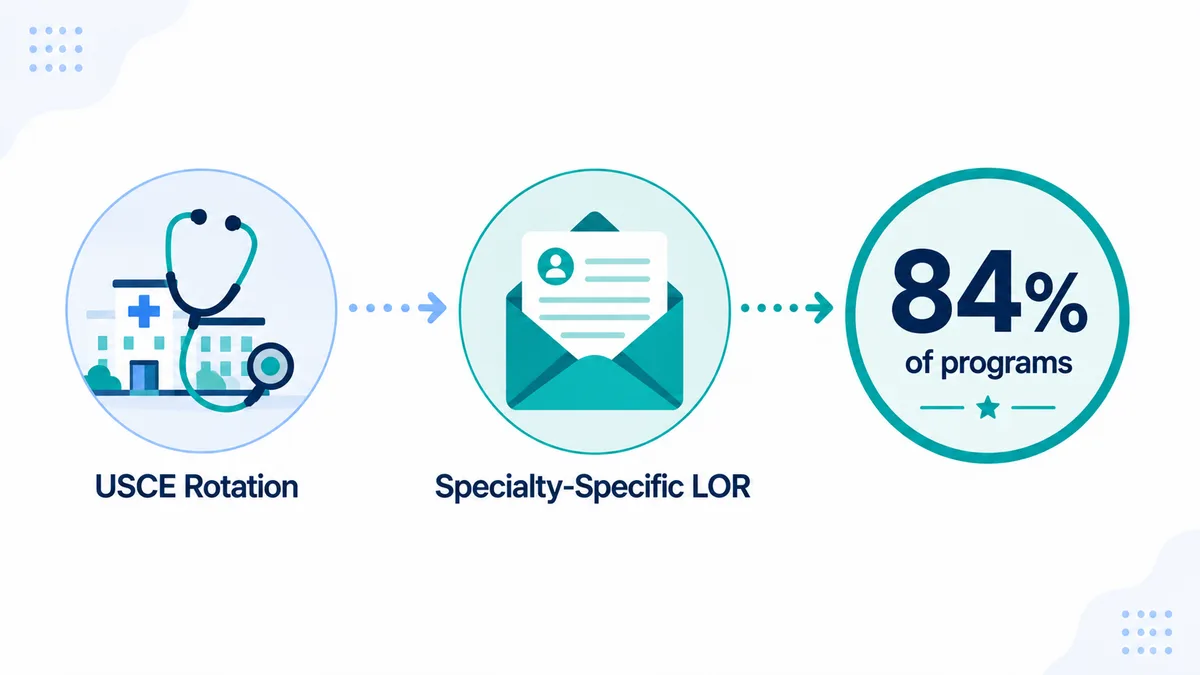
Most advice on USCE stops at “get a good letter,” without showing what separates a letter program directors actually believe from one they quietly discount. There is a real, sourced number behind this: NRMP’s own Program Director Survey rates specialty-specific letters of recommendation as a factor 84% of programs use at the interview-selection stage, with a mean importance of 4.2 out of 5, nearly on par with USMLE Step 1 pass status and the MSPE. USCE rotations are how IMGs earn that letter in the first place.
This guide breaks down what makes a USCE letter land versus fall flat, whether the rotation needs to match your target specialty, how many rotations is actually enough, and the mistakes that quietly undercut otherwise solid clinical experience.
- Specialty-specific LORs are used by 84% of programs at the interview-selection stage (NRMP, 2024).
- USCE is the mechanism IMGs use to earn that kind of letter from a US-based writer.
- The strongest letters use explicit rank/comparison language, not generic praise.
- Aim for 2–4 rotations, with at least one in your target specialty.
- Passive shadowing rarely produces a letter strong enough to matter.
The Data Behind USCE: Why the 84% Number Matters
NRMP’s 2024 Program Director Survey names the interview-selection factors programs actually use: USMLE Step 1 pass status (90%, importance 4.5/5), MSPE/Dean’s Letter (85%, 4.1/5), and specialty-specific letters of recommendation (84%, 4.2/5). There is no line item literally labeled “USCE” in that survey, but USCE is the primary way an IMG builds a relationship with a US-based physician who can write that specialty-specific letter. Read this post as the mechanism behind that 84% figure, not a separate statistic.
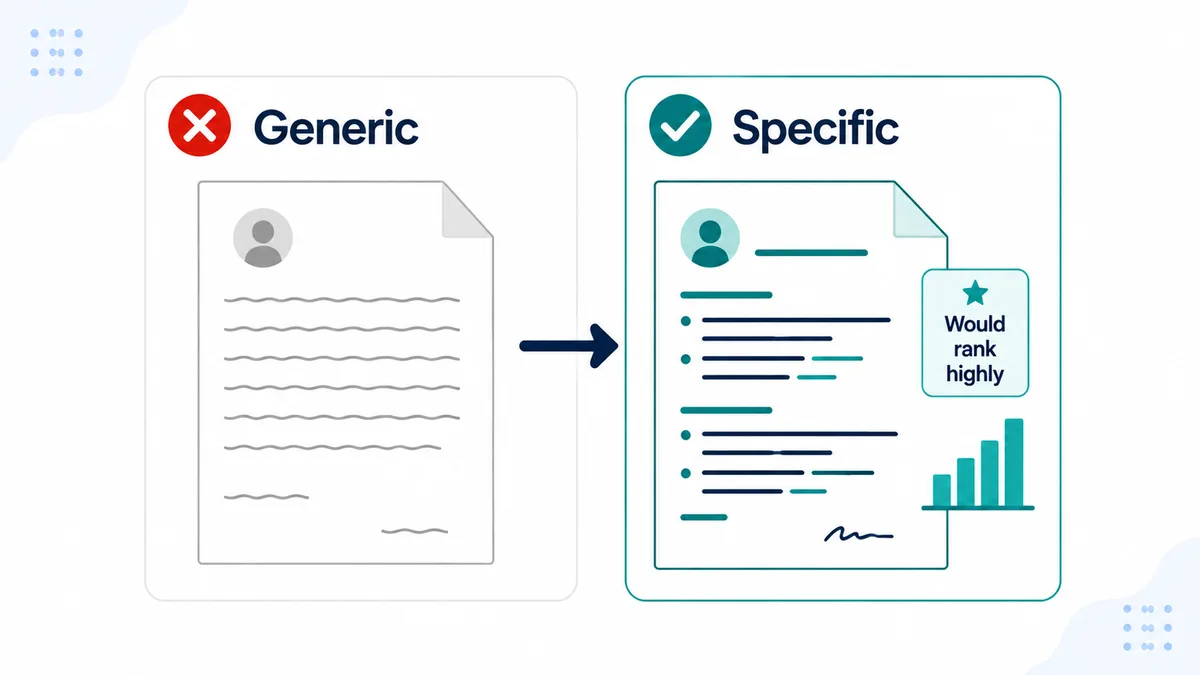
Weak vs Strong USCE Letters
The difference is rarely about warmth of tone. It is about specificity and comparison.
| Weak letter (generic) | Strong letter (what PDs want) |
|---|---|
| “Dr. X is a hardworking, dedicated student who was a pleasure to work with.” | “Dr. X independently took histories on 8–10 patients daily and adjusted management after new labs without prompting, comparable to our PGY-1 residents.” |
| No comparison to US trainees | Explicit benchmarking: “I would rank her among the strongest sub-interns I have supervised.” |
| Vague duration/role: “observed in my clinic” | Specific role: “4-week sub-internship, admitted and co-managed patients, charted independently in Epic.” |
| Written by a supervisor with limited contact | Written by a US-based attending who worked closely with the applicant |
The single strongest differentiator advisors report: direct “would rank” or “would want as my resident” language. Generic praise, however warm, does not carry the same weight.
Does the Rotation Need to Match Your Target Specialty?
It should include at least one that does. Since the NRMP figure specifically measures specialty-specific letters, a USCE portfolio scattered across unrelated fields leaves that particular box unchecked. If you are applying to Internal Medicine, at least one rotation and letter should come from an IM-affiliated writer.
How Many USCE Rotations Is Enough
There is no NRMP-sourced number here; treat this as practitioner consensus, not survey data. Advisors consistently converge on 2–4 rotations totaling 8–12 weeks. Quality outranks quantity: a hands-on sub-internship or elective, with real charting and rounding, is repeatedly ranked above a passive observership. For the cost, timeline, and visa mechanics of arranging these rotations, see how to find the best US clinical experience for IMGs.
Common USCE Mistakes That Backfire
- Passive shadowing marketed as clinical experience: some programs explicitly discount observership-only rotations.
- Asking for the letter too late, instead of building the relationship and requesting it early, with your CV and talking points in hand.
- “Certificate collecting”: stacking many short, disconnected observerships, which reads as padding rather than depth.
- Mislabeling experience, such as calling an observership an “externship”: a credibility risk if a program director calls to verify.
- Choosing prestige over contact: a rotation where the writer barely knows you beats less than one where they do.
Frequently Asked Questions
How many USCE rotations does an IMG actually need for residency applications?
There is no official NRMP number, but the practical consensus among IMG advisors is 2–4 rotations totaling roughly 8–12 weeks, enough to generate 2–3 strong, specific letters without your CV reading as a list of short, disconnected experiences.
Does my USCE rotation need to be in the specialty I'm applying to?
It should include at least one. NRMP’s 2024 Program Director Survey found 84% of program directors weigh specialty-specific letters of recommendation as a key interview-selection factor, with a mean importance of 4.2 out of 5, nearly as high as USMLE Step 1 pass status (90%) and the MSPE (85%). A USCE rotation in your target specialty is usually how IMGs earn that letter.
Does a letter from a US attending carry more weight than one from a home-country mentor?
Generally yes for US programs, because a US-based writer can directly compare you to US medical students and residents and speaks to your performance inside the US clinical system programs are hiring into, which reduces the uncertainty programs have about grading standards from an unfamiliar international medical school.
Is shadowing enough to count as USCE?
Not for letter-writing purposes. Passive shadowing rarely gives a supervisor enough to write specific, comparative statements. Hands-on rotations, sub-internships or electives with real patient responsibility, are what generate letters program directors find persuasive.
What's the single biggest thing that makes a USCE letter stand out to a program director?
Explicit comparison and rank language: a writer stating the applicant performed on par with or above US categorical residents, or directly stating they would rank the applicant highly, rather than generic praise like “hardworking and a pleasure to work with.”
Conclusion
Program directors are not scoring your USCE on effort alone; they are reading it through the lens of a specific, weighted factor: does the letter it produced read like it came from someone who could compare you credibly to a US trainee. Choose rotations that put you close enough to a writer to earn that kind of letter, and the rest of your application gets measurably stronger.
Want expert eyes on your application? Explore our USMLE Step 1 & Step 2 CK preparation program and see how our students have matched into U.S. residency.
Next step
US Clinical Rotations
Hands-on USCE and strong LORs from US clinical settings programs trust.