Best USMLE Study Resources for Step 1, Step 2 CK & Step 3 (2026 Guide + Comparison Table)
Academic Director & USMLE Educator, Dermatology Resident

Ask ten successful USMLE test-takers what resources they used, and you will hear a lot of overlap, but very little agreement on how to actually use them well. This guide covers the resources that consistently show up in high-scoring students’ prep across all three Steps in 2026, what a comprehensive stack actually costs, and how to sequence it.
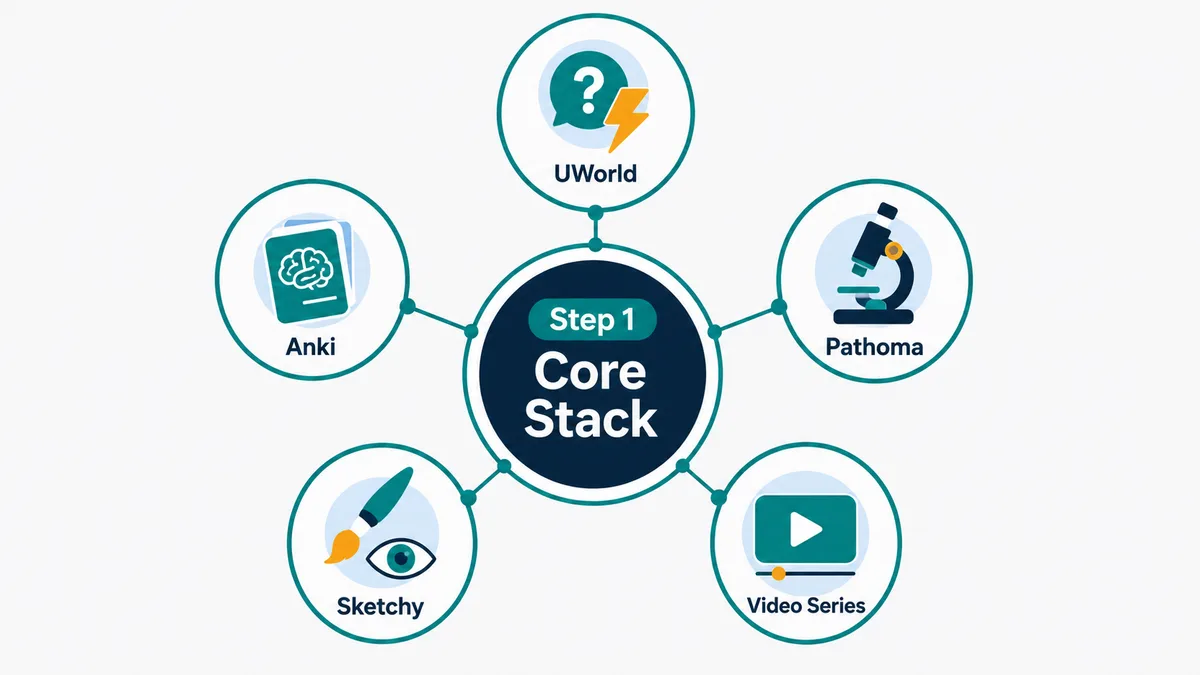
- Step 1 core stack: UWorld + Anki (AnKing) + Pathoma + Sketchy, with one video series layered in.
- Step 2 CK core stack: a CK-specific Qbank + a structured week-by-week plan.
- Step 3 core stack: an MCQ Qbank + a named CCS-specific resource, not a vague “case bank.”
- NBME Free 120/137 are free, official, and everyone should use them.
- Resources matter less than how deliberately you review every block; volume alone does not move your score.
Step 1 Resources
The 2026 consensus “core stack” has firmed up around five names, not the three or four often cited in older posts:
- UWorld: your primary engine for applied recall and exam-style reasoning; still the single highest-value purchase.
- Anki (AnKing deck): spaced repetition for long-term retention, actively maintained and tagged to current First Aid, Pathoma, Sketchy, and even UWorld content.
- Pathoma: the standard pathology video-and-text resource, frequently called the best-value add-on for the money.
- Sketchy: visual mnemonics, especially strong for microbiology and pharmacology.
- Boards and Beyond or Physeo: a full video-lecture series layered on top, for students who want systematic coverage beyond Qbank explanations.
- First Aid: best used as an Anki-linked rapid-review reference in the final weeks, not a standalone primary resource.
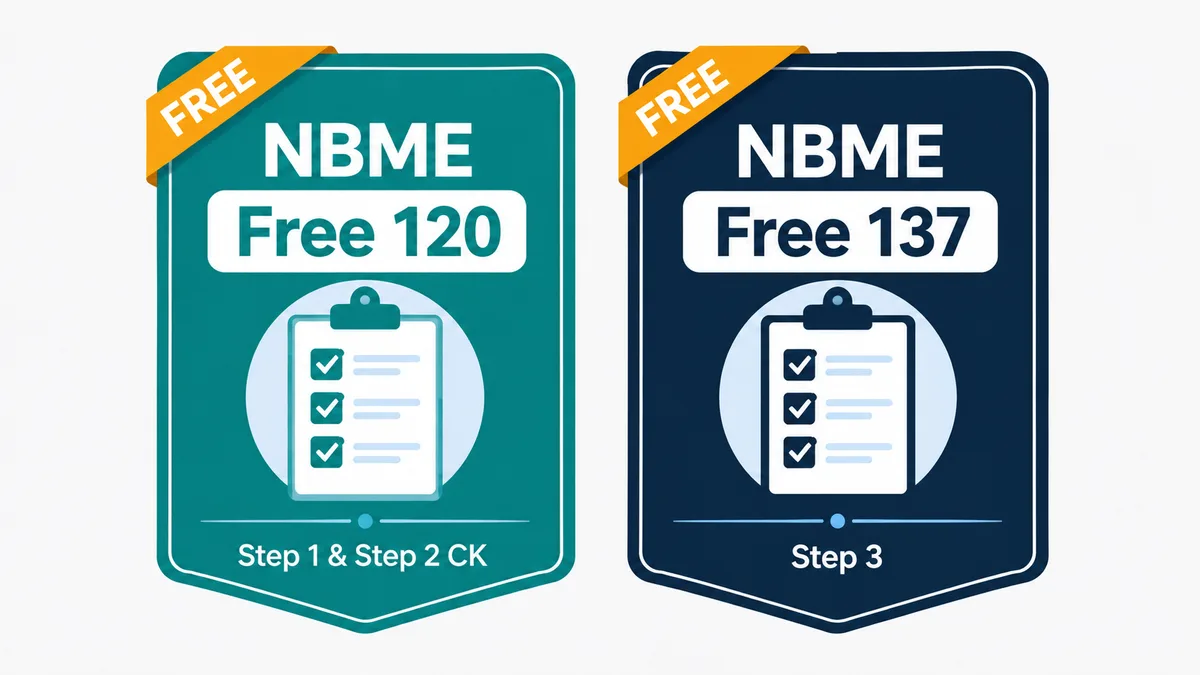
The NBME Free 120 (Step 1 and Step 2 CK) and Free 137 (Step 3) are official, no-cost practice sets written by the same team that writes the real exam. Use them as calibration checkpoints regardless of what else is in your paid stack.
Step 2 CK Resources
Step 2 CK questions lean toward clinical management, “what do you do next,” rather than pure recall, so a CK-specific Qbank matters more than reusing Step 1 materials. Pair it with a real structured timeline; see our full 12-week plan.
Step 3 Resources
Step 3 needs everything from Step 2 CK plus a genuinely named CCS-specific resource for the simulation component, not the vague “a CCS case bank” language many posts use:
- UWorld’s own Step 3 CCS cases, bundled into its Step 3 subscription.
- StudyCCS.com, an independent CCS-specific practice platform.
- The free official NBME CCS practice software, which every examinee should try before any paid resource.
See our Step 3 study plan for how to sequence all of this against the real exam timeline.
Resource Comparison at a Glance
| Resource | Best for | Which Step | Approx. cost (2026) |
|---|---|---|---|
| UWorld | Applied recall, exam-style reasoning | All three | $319–$560/yr by window |
| Anki / AnKing deck | Long-term spaced-repetition retention | All three | Free (deck); app free on desktop/Android |
| Pathoma | Pathology video + text | Step 1 | ~$100/yr |
| Sketchy | Visual mnemonics for micro/pharm | Step 1 | $200–$300/yr |
| Boards and Beyond / Physeo | Full video-lecture coverage | Step 1, Step 2 CK | ~$249/yr |
| First Aid | Rapid final-review reference | Step 1 | ~$50 (book) |
| NBME self-assessment (CBSSA/CCSSA) | Most accurate readiness signal | All three | ~$60/form |
| NBME Free 120 / Free 137 | Free official calibration | All three | Free |
| UWorld Step 3 CCS cases / StudyCCS | Case logic, order sequencing | Step 3 | Included / $69–$89 |
NBME periodically runs 3-form self-assessment bundle discounts a couple of times a year; time your purchase around a promo window rather than buying single forms at full price.
- Collecting resources without a plan for how they fit together.
- Doing Qbank questions passively instead of reviewing every block deliberately.
- Skipping Anki because “it takes too long to set up”: the AnKing deck removes most of that setup cost.
- Ignoring NBME self-assessments in favor of only tracking Qbank percentages.
- Using vague “a CCS case bank” language for Step 3 instead of picking a named resource and actually using it.
Frequently Asked Questions
What's the single most important resource for Step 1?
UWorld, used by roughly 90% of students and still the most predictive of the real exam. Most successful examinees build their prep around UWorld plus Anki (the AnKing deck), with Pathoma for pathology and Sketchy layered in for high-yield micro/pharm recall.
Is Sketchy still worth it in 2026?
Yes for most students. Its visual mnemonic system remains particularly effective for microbiology and pharmacology recall, and it has not been displaced by newer alternatives. It works best as a supplement to Qbank-based review, not a replacement.
Is First Aid still useful now that Step 1 is pass/fail?
Used passively as a primary study tool, most current advisors call it inefficient. Used as an Anki-linked rapid-review reference in the final weeks, alongside Qbank review and spaced repetition, it still earns its place.
What resources matter most for Step 2 CK?
A Step 2 CK-specific Qbank, since question style shifts toward clinical management decisions, plus a structured plan. See our 12-week Step 2 CK study plan for the full sequencing.
What's different about Step 3 resources?
Step 3 needs a named CCS-specific resource on top of your MCQ Qbank, such as UWorld's own Step 3 CCS cases or a dedicated site like StudyCCS, since case-based simulation is a distinct skill MCQ review alone does not build.
Conclusion
The right resources matter, but a mentor who helps you sequence and review them deliberately matters more. Explore our 1:1 mentorship program or read how our mentees structured their resource use.
Next step
Step 1 & Step 2 CK Prep
Structured modules, 1-on-1 mentorship, and a 100-day plan to clear the boards.