What Are The Most Common Questions Asked In Match Interviews
Academic Director & USMLE Educator, Dermatology Resident
Interview day is where a residency application becomes a conversation. Program directors already know your USMLE scores, clinical experience, and research from your ERAS file. What they are testing now is how you think, communicate, and handle pressure in real time. Walking in with a genuine sense of what each question is actually probing, instead of a memorized script, is what separates a confident interview from a stiff one.
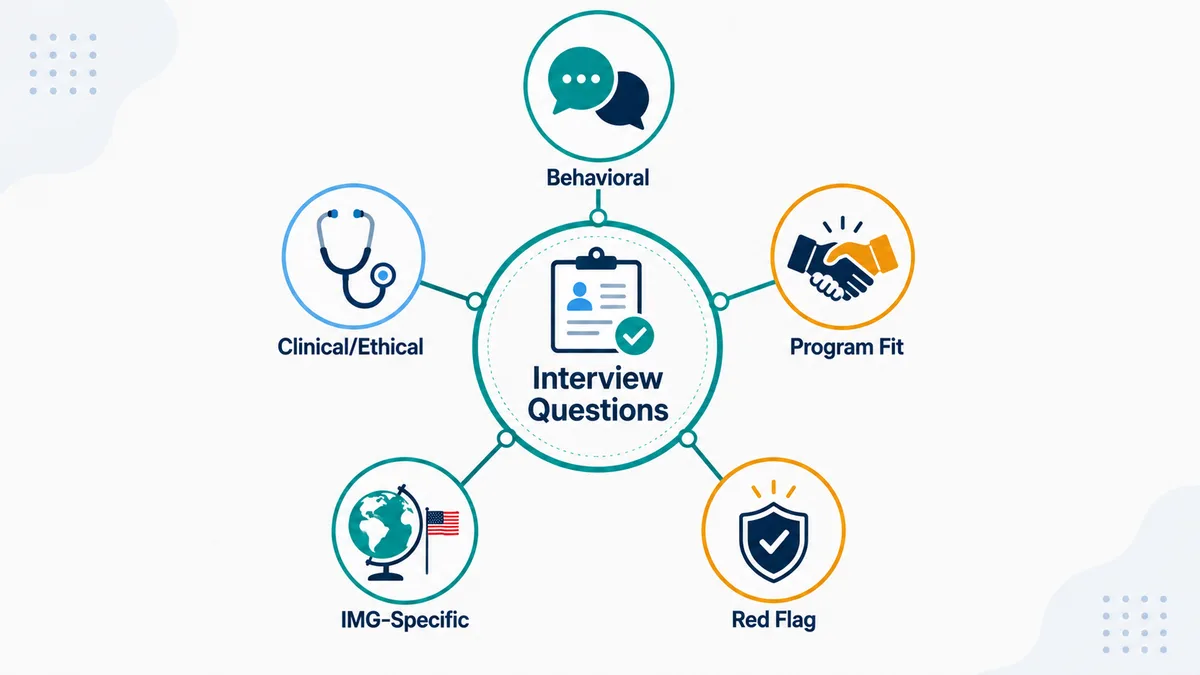
This guide groups the residency interview questions you are most likely to hear into five categories (behavioral, clinical/ethical, program-fit, IMG-specific, and red-flag) and for each one explains what the interviewer is really asking and how to structure your answer, rather than handing you a canned paragraph to memorize. It also covers interview-day etiquette, questions worth asking back, and what to do after the interview ends.
- Every question is testing something specific. Know what, not just how to answer.
- Use a light structure (situation → action → result → lesson) instead of a memorized script.
- IMGs get a few extra questions: visa status, why the US, cultural adaptation. Answer them factually, not defensively.
- Address red flags (gaps, low scores) in under 90 seconds: fact, context, change, evidence, move on.
- Thank-you notes rarely change your rank position. Some programs explicitly say skip them.
The Real Skill: Knowing What They Are Actually Asking
Almost every interview question is a proxy for one of a handful of underlying concerns: can you communicate clearly, do you handle pressure and conflict well, will you fit this program’s culture, and is there anything in your file that needs explaining. Once you see the question behind the question, you can structure any answer around it instead of trying to memorize dozens of scripts. For the questions where something in your file needs addressing, see how program directors weigh interview performance against your application once you are in the room.
Behavioral & Personal Questions
| Question | What they are really asking | How to structure your answer |
|---|---|---|
| “Tell me about yourself.” | Can you edit your own story into something relevant and concise? | A moment that pulled you toward medicine → what pulled you toward this specialty → 1–2 differentiators → why this program, now. Keep it to 60–90 seconds. |
| “Tell me about a time you disagreed with a colleague.” | How you handle conflict, not who was “right.” | Situation → your specific action → result → what you’d do differently. Never throw a colleague under the bus. |
| “How do you handle stress or a heavy workload?” | Whether you have a real coping system, not just composure on paper. | Name one specific habit or tool, then one concrete moment it worked under real pressure. |
Clinical & Ethical Scenario Questions
| Question | What they are really asking | How to structure your answer |
|---|---|---|
| “Describe a challenging clinical case and how you managed it.” | Your clinical reasoning and composure, not the diagnosis itself. | Brief case → your specific role/action → outcome → one lesson you have applied since. |
| “A colleague makes a medical error: what do you do?” | Whether patient safety beats loyalty for you. | Patient safety first → escalate appropriately → no cover-ups, and no publicly blaming the colleague. |
Program-Fit & Career Questions
This question specifically checks whether you actually researched them. Name 1–2 concrete program features (a rotation, a mentorship structure, a research track) tied to your own goals. A generic answer that could apply to any program is the single most common miss here.
“Where do you see yourself in 5–10 years?” is gauging goal clarity and fit with what the program can actually produce. Align your answer to whether the program is academic or community-based, fellowship-heavy or not.
IMG-Specific Questions
These are logistics and adaptation questions, not trick questions. Answer them factually and forward-looking rather than defensively.
- “Why did you pursue training in the US rather than your home country?”: frame it as pursuing opportunity, never as escaping a lack of options at home.
- “What visa will you need, and does the program sponsor it?”: know your own status (J-1 vs H-1B) cold before the interview; answer neutrally and factually.
- “What challenges do you expect as an IMG, and how will you handle them?”: name one real adjustment and one concrete step you have already taken to close that gap.
- “How will you adapt to communicating with US patients and colleagues?”: cite a specific rotation or US clinical experience moment where you actively adapted your communication style.
Red-Flag & Gap Questions
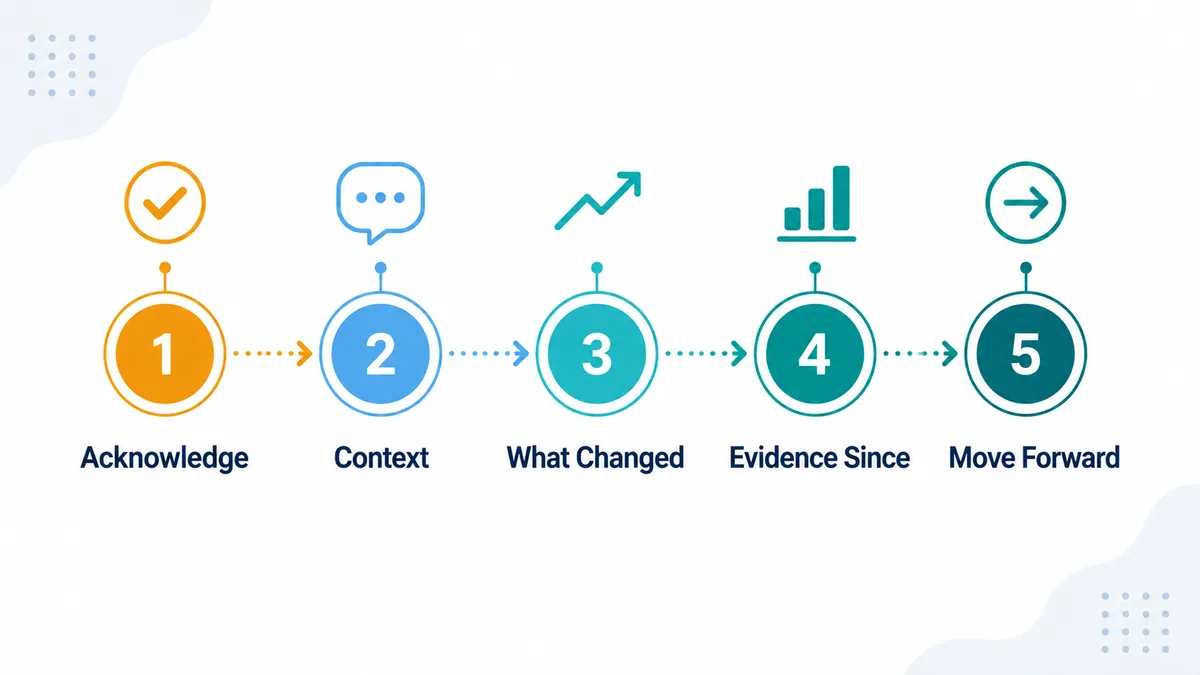
“We noticed a gap in your CV / a failed Step attempt / a lower score. Can you explain?” is an accountability test, not an interrogation. Keep your answer to 60–90 seconds:
- Acknowledge the fact plainly. Do not minimize or dodge it.
- Give factual context without blaming anyone else.
- State what changed after that point.
- Point to evidence since: a retake score, sustained clinical activity, a completed project.
- Pivot forward: do not dwell on it once you have answered.
Keep your spoken narrative consistent with your written ERAS application throughout. Interviewers are trained to notice when the two do not match, and a strong, consistent CV and application narrative makes this far easier to keep straight under pressure.
Virtual vs In-Person Interview Etiquette
Most specialties, including Internal Medicine, still recommend a virtual format for the 2025–2026 cycle, while some surgical and subsurgical specialties have moved back toward in-person or added optional second-look visits. Whichever format you get:
| Format | What matters most |
|---|---|
| Virtual | Camera at eye level, quiet well-lit room, stable internet, look at the camera (not the screen) when speaking |
| In-person | Arrive early, professional attire, engage genuinely with residents during informal moments (they are often asked for feedback) |
Questions to Ask and Ones to Avoid
Have 2–3 genuine questions ready that show you researched the program, such as asking about mentorship structure or how the program supports resident well-being.
- Anything about salary or benefits with faculty: save it for current residents.
- “How am I doing compared to other candidates?”: programs cannot and will not answer this.
- Anything already answered on the program’s own website: it signals you did not prepare.
After the Interview
A short, genuine, specific thank-you email within about a week is a reasonable default. But check each program’s guidance first, since several specialties now explicitly tell applicants not to send one, and the NRMP Match Communication Code of Conduct bars programs from letting post-interview contact affect your rank position either way. Attending or skipping an optional second-look visit similarly has no bearing on where you land on the list.
Frequently Asked Questions
Do residency programs interview IMGs differently than US medical graduates?
Not in structure, but expect a few IMG-specific questions. Visa sponsorship, why you are training in the US, and how you will adapt to the US healthcare system and culture. Answer these matter-of-factly and tie them back to strengths like adaptability and clinical readiness rather than treating them as a defense.
How should I explain a gap year or a failed USMLE attempt in my interview?
Keep it to about 60–90 seconds: state the fact plainly, give context without blaming anyone, explain what you changed, and point to evidence of improvement since (a retake score, sustained clinical activity, and so on), then move the conversation forward.
Are residency interviews in 2026 virtual or in-person?
It varies by program. Most non-surgical specialties, including Internal Medicine, continue to recommend a virtual format for the 2025–2026 cycle, while some surgical and subsurgical specialties have shifted back to in-person or added optional in-person “second look” visits. Confirm the exact format with each program’s invitation.
Should I send a thank-you note after a residency interview, and does it actually matter?
It rarely single-handedly changes a rank decision, and under the NRMP Match Communication Code of Conduct, programs cannot let post-interview contact affect ranking. Some specialty guidance now tells applicants a thank-you note is unnecessary. If you send one, keep it short, genuine, and specific. Skip it if the program’s guidance says not to.
What questions should I avoid asking my interviewers?
Skip anything about salary, benefits, or call schedule with faculty (save those for current residents), and never ask something already answered on the program’s own website, since it signals you did not do your homework. Also avoid asking how you compare to other candidates or anything about your own ranking chances.
Conclusion
Residency interview questions are not a script to memorize. They are a small set of underlying concerns wearing different outfits. Once you can spot what a question is really testing, you can build a genuine, well-structured answer for almost anything the room throws at you, including the IMG-specific and red-flag questions many applicants dread most.
Want expert eyes on your interview prep? Explore our USMLE Step 1 & Step 2 CK preparation program and see how our students have matched into U.S. residency.
Next step
Residency Match Strategy
Specialty selection, application strategy, and interview prep for the Match.